
Common Craniosacral Dysfunctions and Their Impact on Health
The craniosacral system is essentially an unnoticed but integral part of our total well-being. It is the container and the fluid surrounding and protecting the brain, within which the central nervous system lives. When out of balance or restricted in some form, it manifests in a multitude of ways to affect a person's physical, emotional, and mental health. Let’s explore some of the most common craniosacral dysfunctions and their potential impacts on well-being.
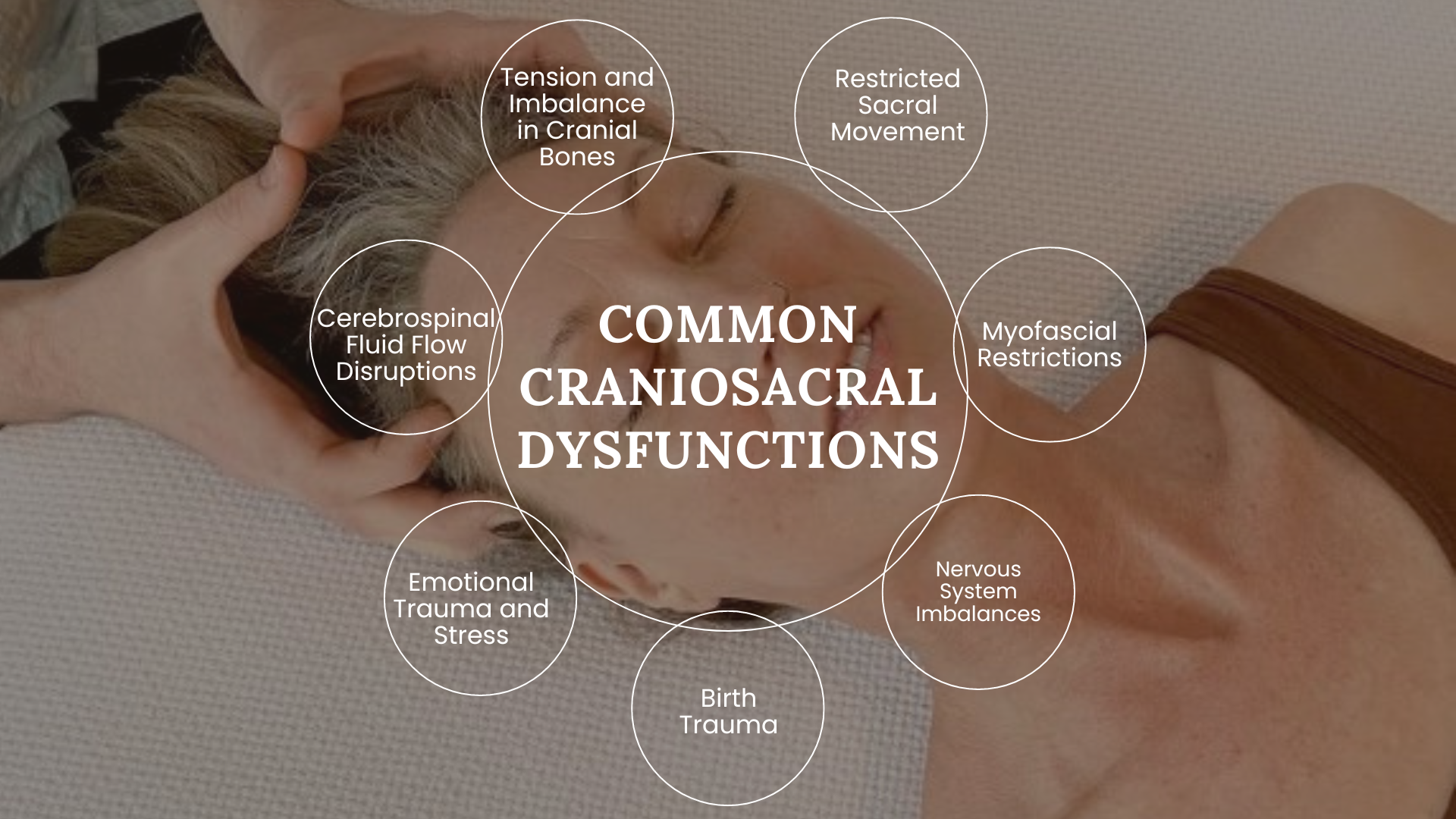
1. Cranial Bones: Tension and Imbalance
Symptoms: Headaches, migraines, TMJ (jaw pain), sinus
Impact: Such bones in the cranium, set up to be solid, are believed to move slightly. Any misalignment or restriction to these bones interferes with the free flow of cerebrospinal fluid. It results in chronic pain and discomfort, like headaches, migraines, or jaw tension. Generally, these imbalances result from structural problems in the cranium, which arises due to injury, stress, or poor posture. CST makes it possible to reset these bones and ultimately allows for better-flowing CSF and relief from these symptoms.
2. Sacral Restriction
Symptoms: Lower back pain, sciatica, hip pain
Impact: It plays a critical role at the base of the spine for CSF flow. When the sacrum is restricted or imbalanced, it creates a domino effect down the spine, and that creates imbalances in the entire spine. Therefore, that produces generalized musculoskeletal problems such as chronic lower back pain, sciatica, or hip pain. One treats the mobility of the sacrum itself through craniosacral therapy to end those restrictions and bring balance back to one's body.
3. Interruptions in the flow of the cerebrospinal fluid
Symptoms: The patient suffers from the presence of lethargy and mental fogginess, even cognitive problems.
Impact: It cushions the brain and spinal cord, feeding and protecting them as they go about their waste removal functions. When it's not flowing properly, it has been reported that the central nervous system does not respond as well as it should, with manifestations often being mentally related terms such as fatigue, memory loss, or the inability to think clearly. Craniosacral therapy establishes optimal flow of CSF to assist patients in regaining clarity of mind, increased levels of energy, as well as improvement in cognitive functioning.
4. Myofascial Restrictions
Symptoms: Tightness of the muscles, pain in the joints and restricted range of motion
Impact: Fascia is the connective tissue layer that encloses muscles, organs, and various body structures. If restricted because of injury, stress, or poor posture, these areas of fascia could cause pain, stiffness, and a decrease in movement. The myofascial restrictions could impact the craniosacral system, which could cause further dysfunction. Craniosacral therapy works to release the restrictions, which allow for a greater range of movement and the reduction of chronic pain.
5. Emotional Trauma and Stress
Symptoms: Anxieties, depressions, emotional imbalance
Impact: This has the effect of finding physical expression within the craniosacral system. The tension of emotional imbalance causes dysfunctional flow of rhythm in the craniosacral system, which, in turn, contributes to mental and physical distress. CST, therefore, works on helping people with physical tension due to emotional blockages to their restoration to emotional healing as well as all-round wellness.
6. Imbalance of the Nervous System
Symptoms: Insomnia, nervousness, chronic stress
Impact: This craniosacral system is closely related to the autonomic nervous system (ANS), which is the one that is responsible for the reaction the body needs to have with regards to stress and relaxation. Hence, an imbalance of the craniosacral system causes chronic stress, insomnia and even problems in dealing with the stress response in the body. As CST brings back the natural rhythm of the craniosacral system, it can bring the ANS into a balance so that sleep would improve, nervousness reduced, and more efficiently deal with stress in the body.
7. Birth Trauma
Symptoms: Colic, feeding difficulties, developmental delays in infants
Impact: The birthing process can be traumatizing to babies, leading to craniosacral dysfunction early in life. The compression of the head, neck, and spine during the birthing process can cause the craniosacral system to become misaligned and restricted, which leads to colic, feeding difficulties, and delaying motor skills. Gentle craniosacral therapy might discover a lot of these restrictions that can be released to encourage the healthiest development in infants.
Treatment of Craniosacral Dysfunction
The craniosacral therapy is a gentle, hands-on approach, directed at the elimination of tensions in the craniosacral system for the proper functioning of the central nervous system. This is because CST enhances physical, emotional, and mental welfare by improving the general functioning of the system concerned. It can be used to help relieve chronic conditions that are notoriously otherwise hard to treat.
Whether you have chronic pain, stress-related symptoms, or developmental issues, craniosacral therapy provides a holistic, non-invasive healing approach to revitalize balance and order in your body's systems.
At Zen Den Newport, our experienced therapists offer specialized craniosacral therapy treatments to help mitigate these dysfunctions and support your movement toward optimal health. Call today to find out how craniosacral therapy can enhance your life.